On Friday 23 January, representatives from radio astronomy observatories and administrations of Germany, France, Italy, the Netherlands, and Sweden, together with members of the Committee on Radio Astronomy Frequencies (CRAF) and the Square Kilometre Array Observatory (SKAO), met at the Paris Observatory to exchange views on the challenges posed by unintended electromagnetic radiation (UEMR) from Low Earth Orbit (LEO) satellite constellations. UEMR is understood as radio waves that likely leak from electronics onboard satellites and are at low levels compared to communication signals, yet are sufficiently strong to affect astronomical observations. Participants discussed the significance of radio astronomy and the ways in which UEMR from satellites can affect the highly sensitive astronomical observations as conducted with today's radio telescopes.
Published by the editorial team, 5 February 2026
Experts from CRAF and the SKAO reported on dedicated measurements of UEMR, which allow the estimation of its potential impact on radio astronomical observations, and summarised the regulatory context. Administrators contributed their perspectives on various regulatory paths, and underlined the importance of collaboration between the scientific community, industry, and administrations. Ongoing discussions between the industry sector and radio astronomy were also highlighted, with efforts to design future satellites and constellations with due consideration for UEMR.
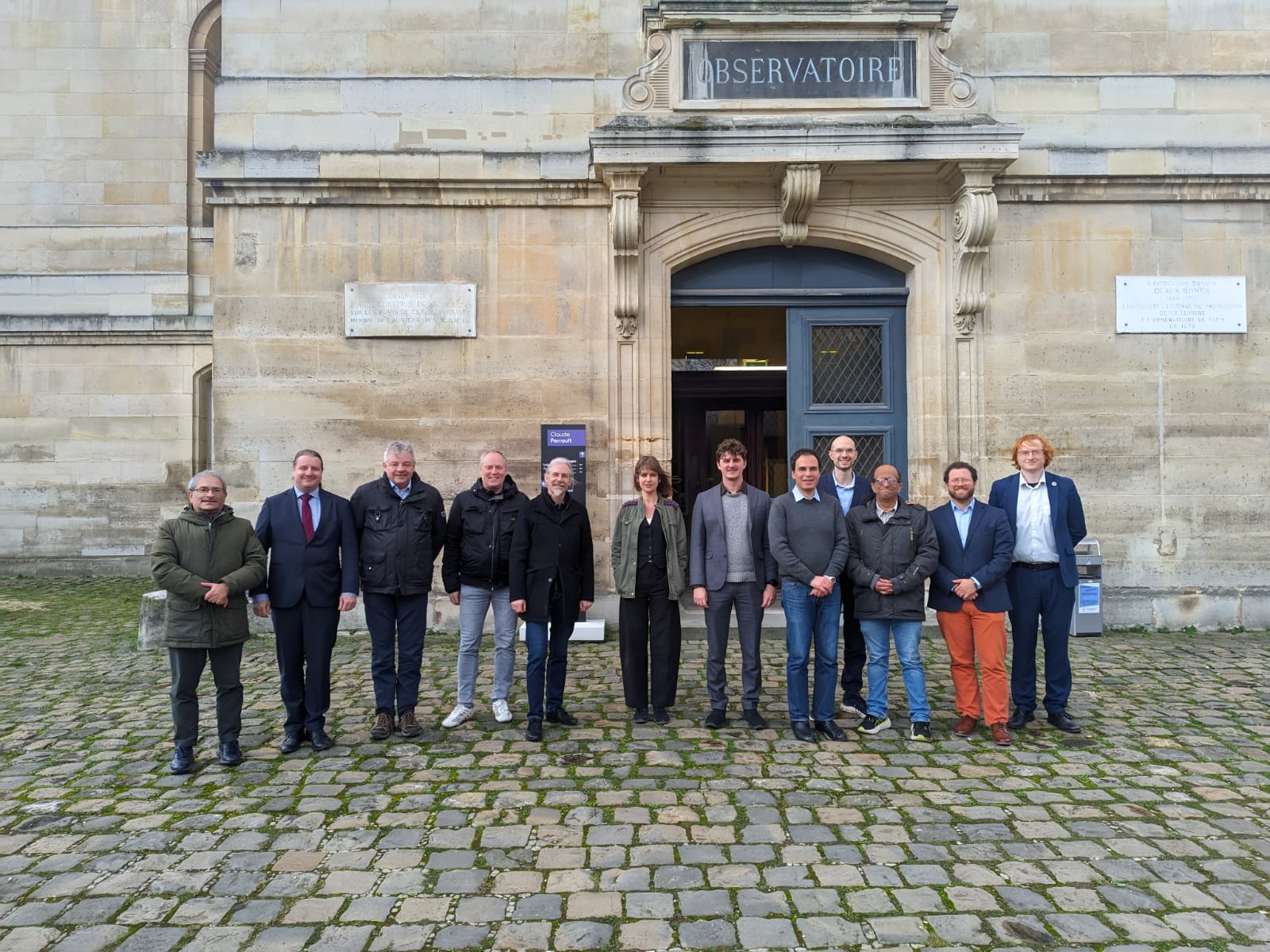
The meeting was regarded as an opportunity to strengthen connections between the stakeholders and to develop a shared understanding of the impact of the increasing interference from satellite constellations on radio astronomy. Participants acknowledged the importance of radio astronomical research and agreed to remain in active contact to work on solutions.